Expanding Capacity for Tucson's Sewer System
Installing four miles of large-diameter interceptor sewer to strengthen wastewater capacity, support future growth, and improve long-term system reliability across Tucson and South Tucson.
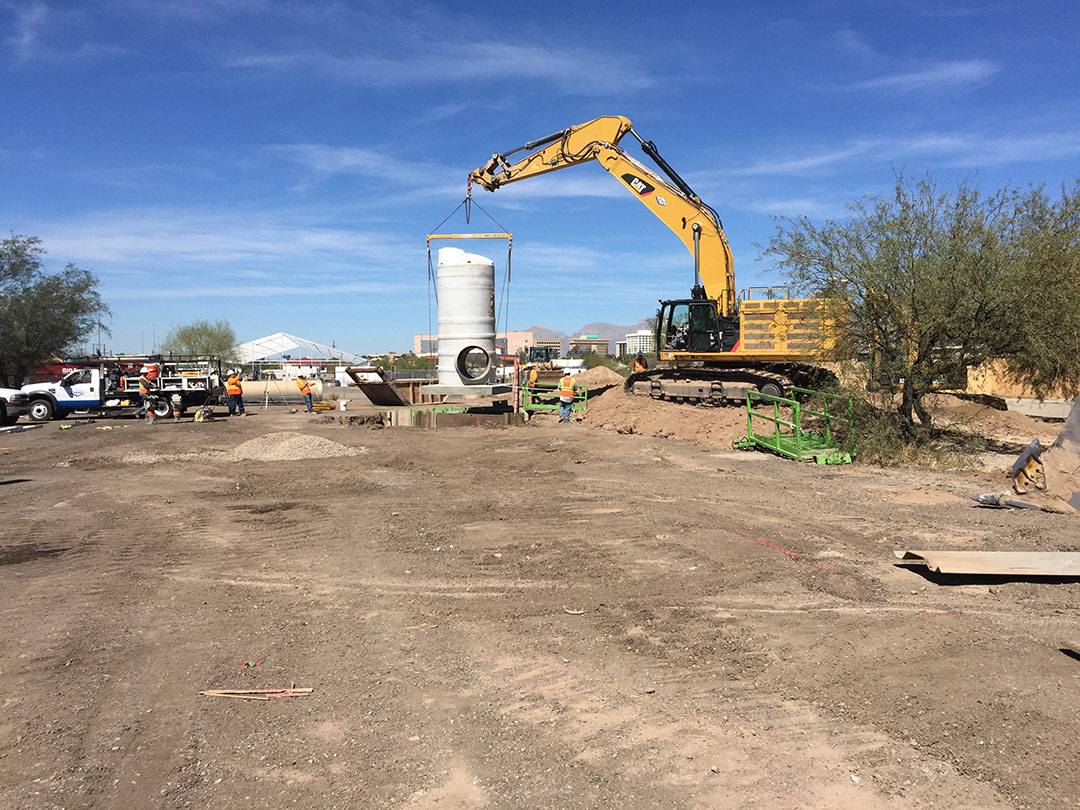
KE&G partnered with Pima County Regional Wastewater Reclamation Department to install approximately four miles of 36- to 48-inch interceptor sewer through one of Tucson's most congested utility corridors. The project combined extensive preconstruction planning, complex utility coordination, and deep excavation to increase wastewater capacity while supporting future development throughout the Aerospace Corridor.
Project Overview
The Southeast Interceptor Sewer Augmentation (SEI) project was designed to increase wastewater conveyance capacity through Tucson and South Tucson while improving the long-term reliability of one of the region's most critical sewer systems. Extending along 36th Street between 18th Street and Euclid Avenue, the project included installation of approximately four miles of new 36- to 48-inch interceptor sewer through dense urban infrastructure and heavily developed utility corridors.
KE&G joined the project during design to provide preconstruction services, helping refine the alignment, evaluate constructability, and coordinate with numerous public agencies and utility owners before construction began. The project required collaboration with the City of Tucson, South Tucson, ADOT, Tucson Water, Union Pacific Railroad, Tucson Electric, Kinder Morgan, CenturyLink, Comcast, and the owner's public outreach consultant to keep stakeholders informed throughout construction. Beyond increasing system capacity, the improvements positioned the wastewater system to accommodate future growth within the Aerospace Corridor while providing greater operational flexibility for future maintenance and repairs.
Scope of Work
- Installed approximately four miles of 36- to 48-inch interceptor sewer.
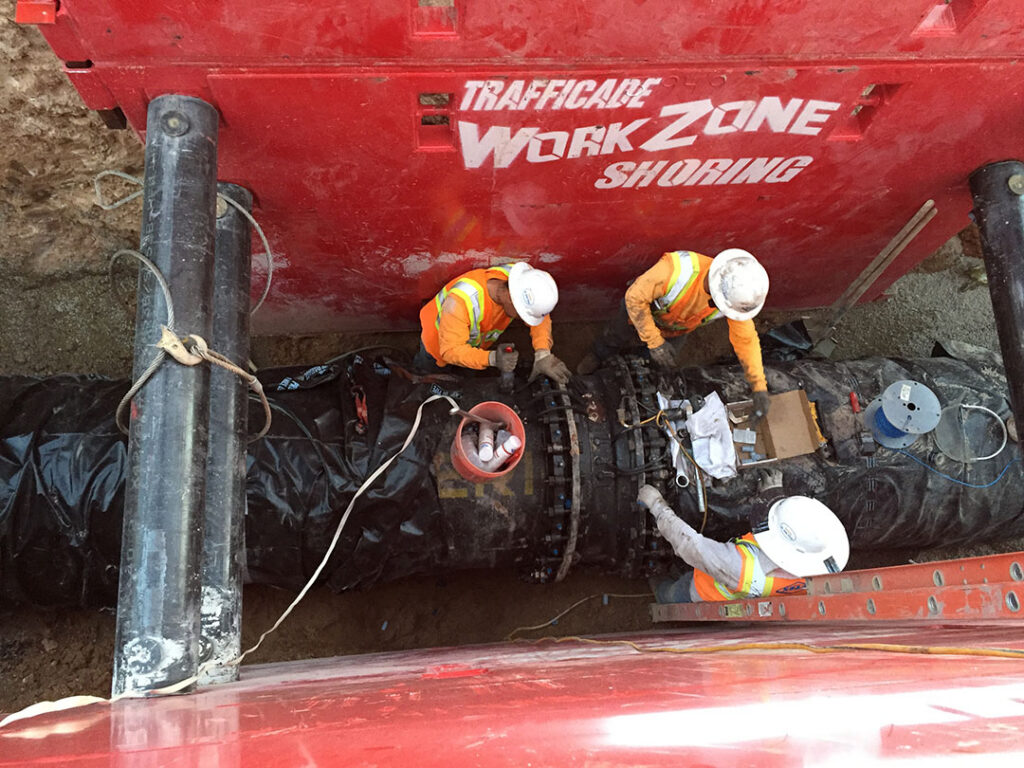
- Performed deep excavations reaching approximately 27 feet.
- Installed seven large-diameter jack-and-bore crossings.
- Crossed active railroad tracks and a high-pressure gas line.
- Crossed the City's largest water main.
- Relocated existing waterlines and coordinated numerous utility crossings.
- Designed and implemented a gravity bypass system managing approximately 12 MGD of wastewater flow.
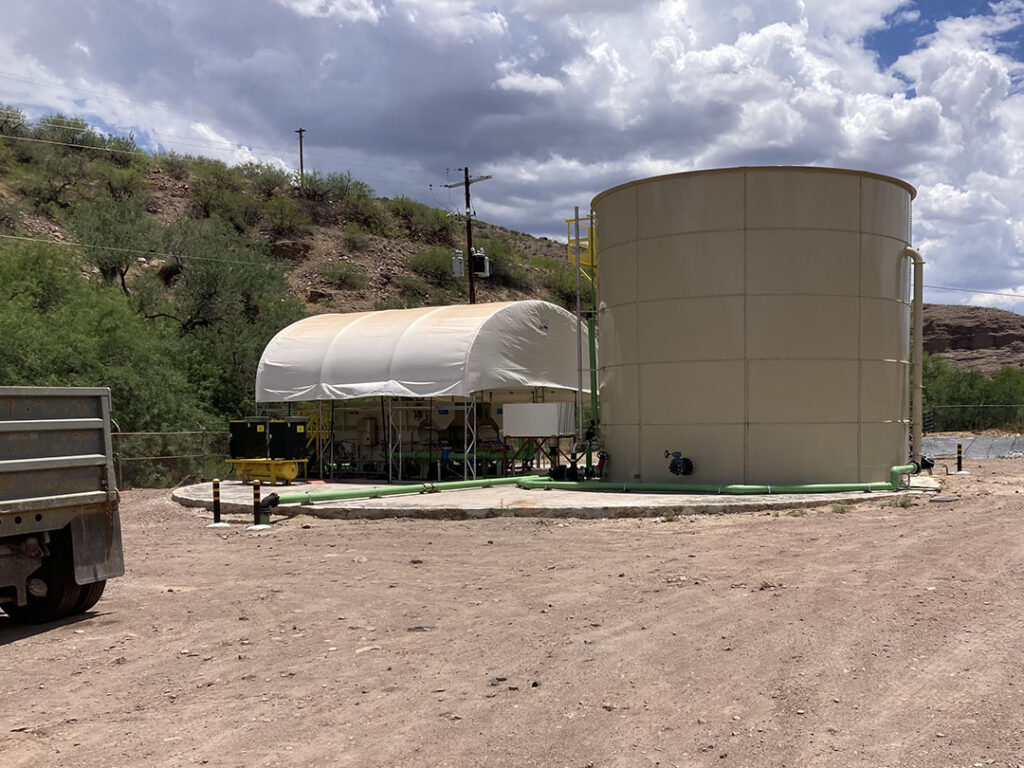
- Constructed two biofilter odor control structures.
- Eliminated an existing chemical dosing system.
- Replaced curbs, sidewalks, ADA ramps, drainage features, traffic signals, striping, and roadway pavement.
- Completed greenway improvements along the railroad corridor.
Our Approach
KE&G became involved during the design phase, providing constructability reviews, value engineering, cost estimating, scheduling, sequencing, and lifecycle cost analyses to help develop an efficient and maintainable solution. The team evaluated pipe materials, manhole alternatives, traffic control strategies, and construction sequencing to reduce project risk before field operations began.
Construction required extensive coordination through one of Tucson's busiest utility corridors. The new interceptor crossed major water infrastructure, active railroad tracks, a high-pressure gas line, and numerous underground utilities while maintaining existing services throughout construction. To facilitate installation, KE&G developed a gravity bypass system that diverted approximately 12 million gallons of wastewater per day without requiring continuous bypass pumping, thereby reducing operational complexity and long-term maintenance costs. The project also encountered right-of-way delays associated with the abandonment of a historic Union Pacific Railroad railbed. Rather than allowing those delays to impact overall progress, KE&G resequenced construction activities and completed portions of the work out of sequence while easements and property acquisitions were finalized. This flexible approach helped minimize impacts to stakeholders and maintained project momentum despite changing conditions.
Built on Ownership
As a 100% employee-owned company, every project we deliver reflects the commitment of the people who own the outcome. Our employee owners take pride in building lasting infrastructure, solving challenges collaboratively, and delivering work that strengthens the communities we serve. That ownership mindset drives accountability, quality, and long-term relationships on every project.